Reverse Osmosis Filtration
One of the very best wellness related choices we can make is to get ourselves and our families off of plastic bottled water and potentially hazardous tap water.
At ThinkPure, we know RO technology, correct system design, installation and maintenance, soup to nuts.
We have tested and rejected numerous RO brands since 2011. Whether you need a simple RO installation under your kitchen sink or a comprehensive design with multiple points of use, we can get it done right the first time.
If you are building new or remodeling, call as early as possible for the very best results.
How does Reverse Osmosis Work?
Reverse Osmosis filters work by water being forced through a semi permeable membrane.
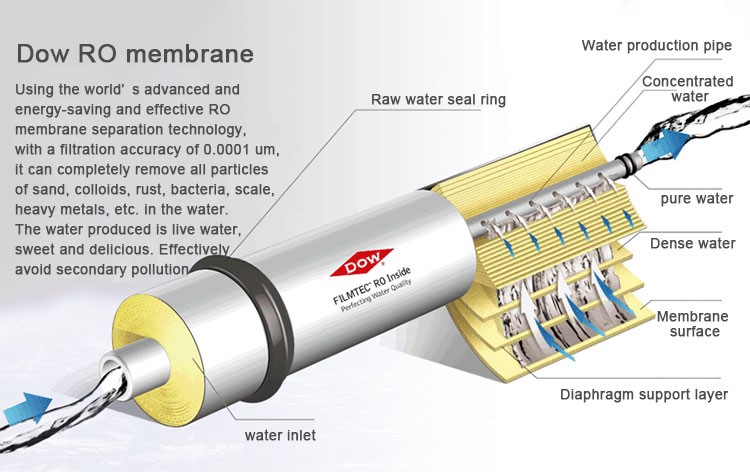
The pores in the membrane are so small that water molecules can fit through but most everything else is removed. A bacteria would be like an elephant trying to pass through the holes in a window screen.
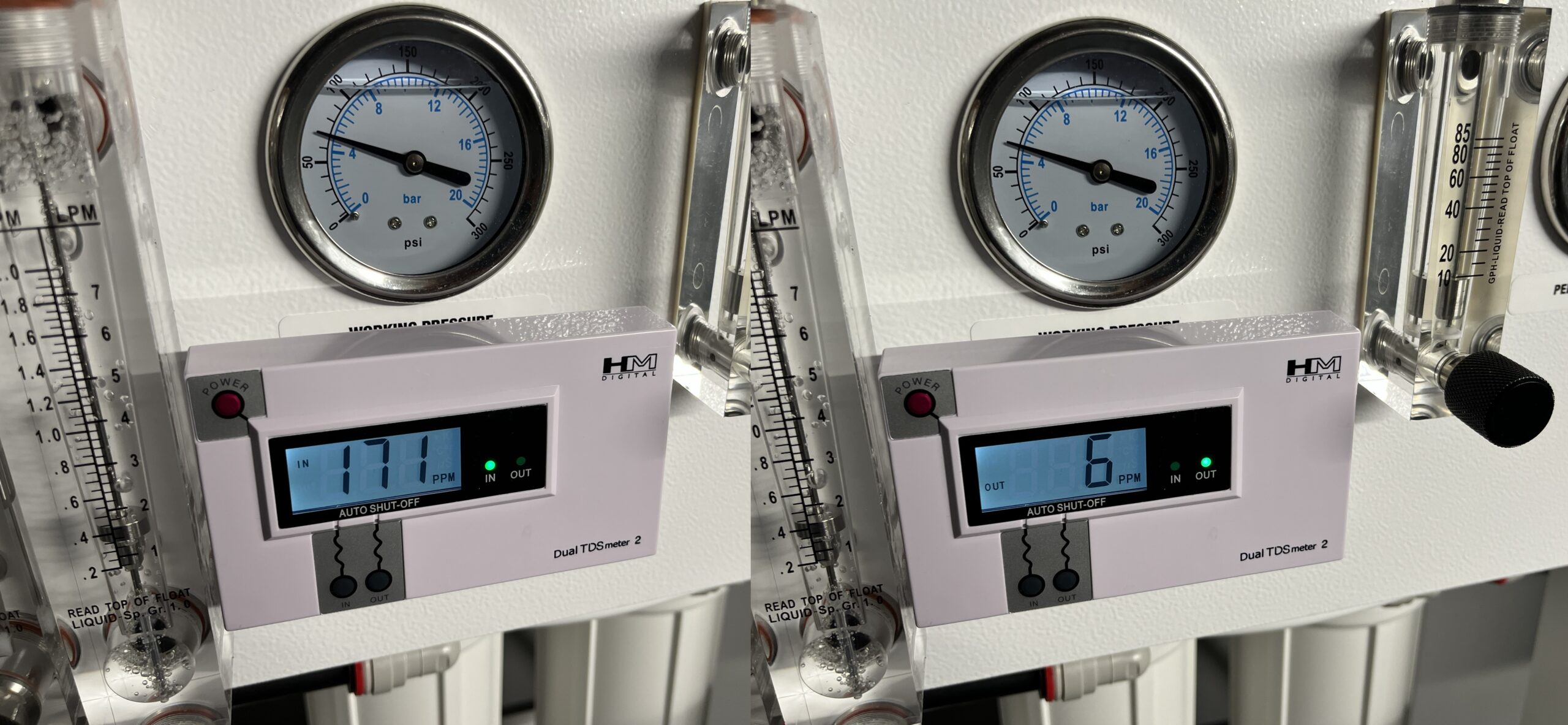
The rejection rates for impurities varies:
- 95% for sodium and fluoride
- 99% for PFAS PFOA
- 99.9% for particulates, bacteria, pharmaceuticals and various microorganisms
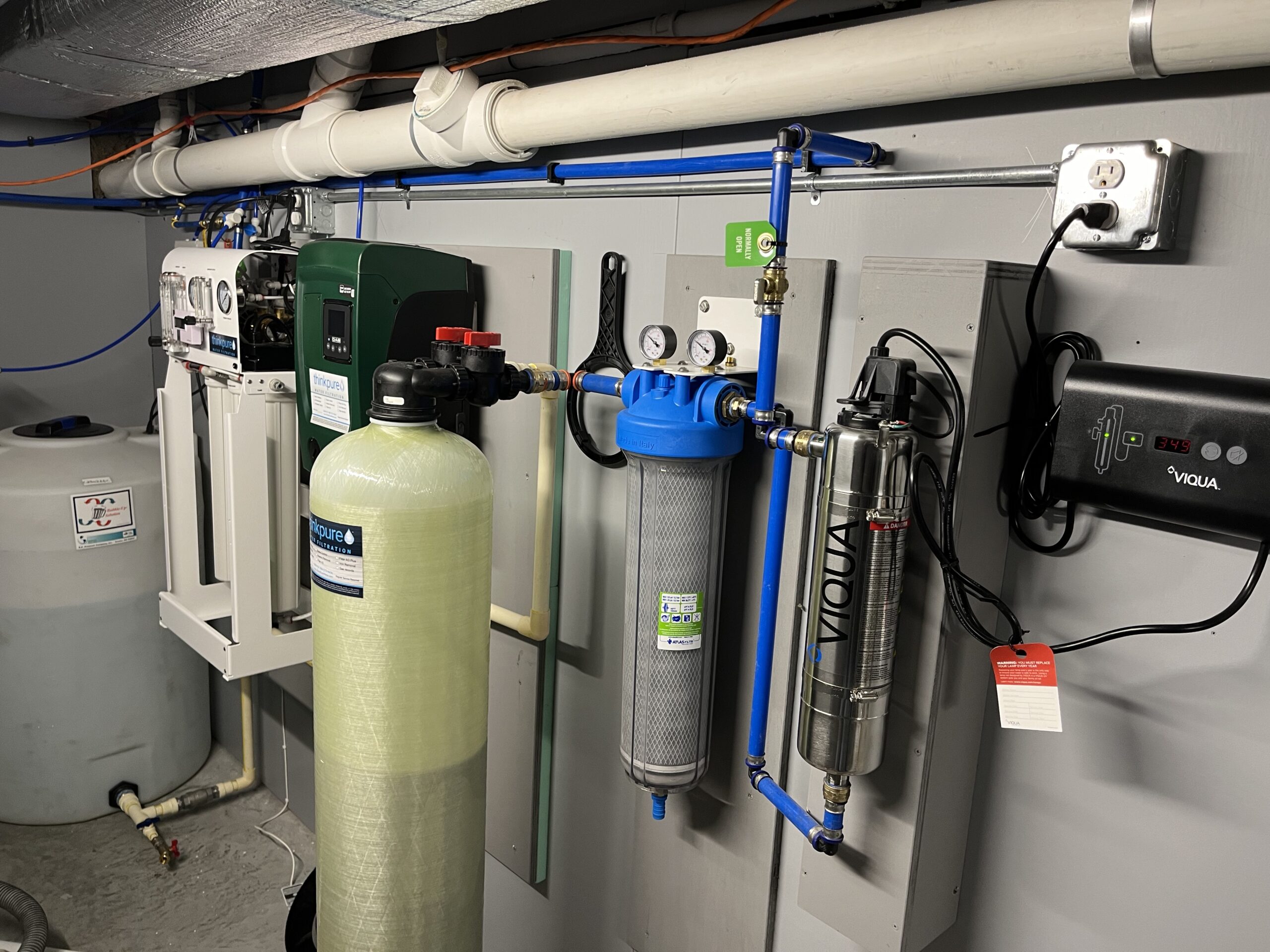
While making water, RO’s produce a “permeate” or pure water stream and a “concentrate” or reject water stream. Reject water is sent to the drain under the sink, while pure water is usually stored in a pressurized tank.
Sometimes a much larger atmospheric tank for more complex projects is installed in the basement. Only by rejecting water at a precisely controlled amount, is the membrane able to continuously clean itself, not clog with impurities and reject the least amount of water possible.
Do we need an RO if we already have a whole house filter?
Most likely yes. Whole house filters vary widely and are designed differently.
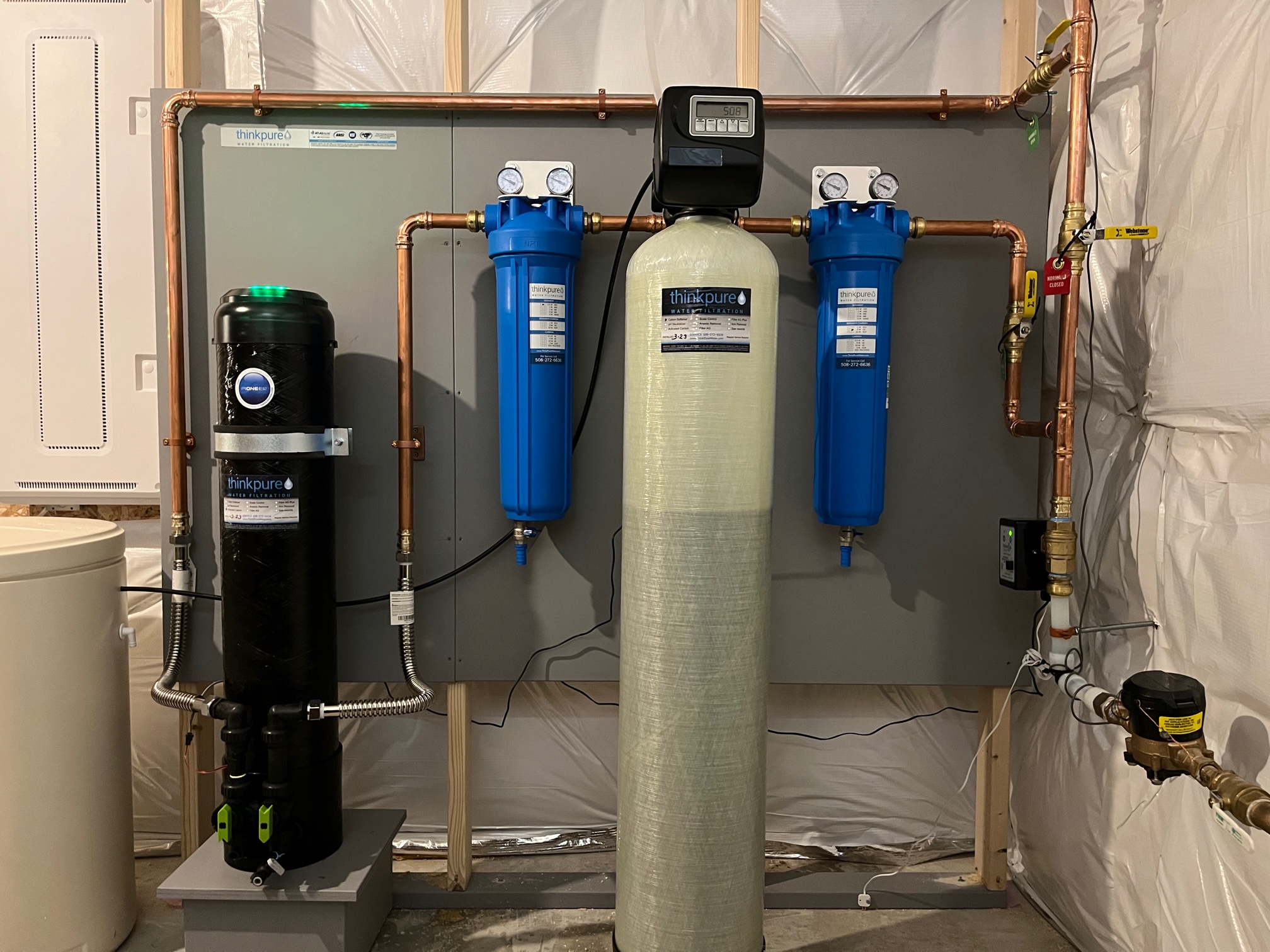
Even a system with softening and a bigger carbon floor tank will not remove a number of impurities such as sodium, chlorides, fluoride, nitrates, pesticides, metals, microplastics, nanoplastics and biological contaminants.
Does RO remove microplastics and nanoplastics?
Yes. Drinking from any container made of plastic can be harmful.
Studies have found literally hundreds of thousands of micro and nanoplastic particles in a single liter of plastic bottled water. Significant amounts are also found in many tap waters.
RO physically filters particles from water down to 0.0001 microns and is known as the most effective way to eliminate both microplastics and nanoplastics from water.

Should I consider whole house RO water?
No, for a ton of reasons.
We can significantly improve your whole house water without RO. If you live close to the ocean and have a well with severe salt water intrusion, then you need whole house RO or even have your water delivered.
Other than that, you don’t need whole house RO water. These costly systems need at least 400 gallons of stored water, an electronic control panel, a water softener, a pressure delivery pump, a pH neutralizer tank, a UV sterilizer and a ton of maintenance.
Certainty, whole house water should be purified to a certain safe level but only cooking, drinking and ice making water needs to be RO purity.
Is RO water safe to drink and can minerals be put back?
Yes! This question is a common concern for many seeking better water for their families. We believe RO is the purest and safest water practically speaking.
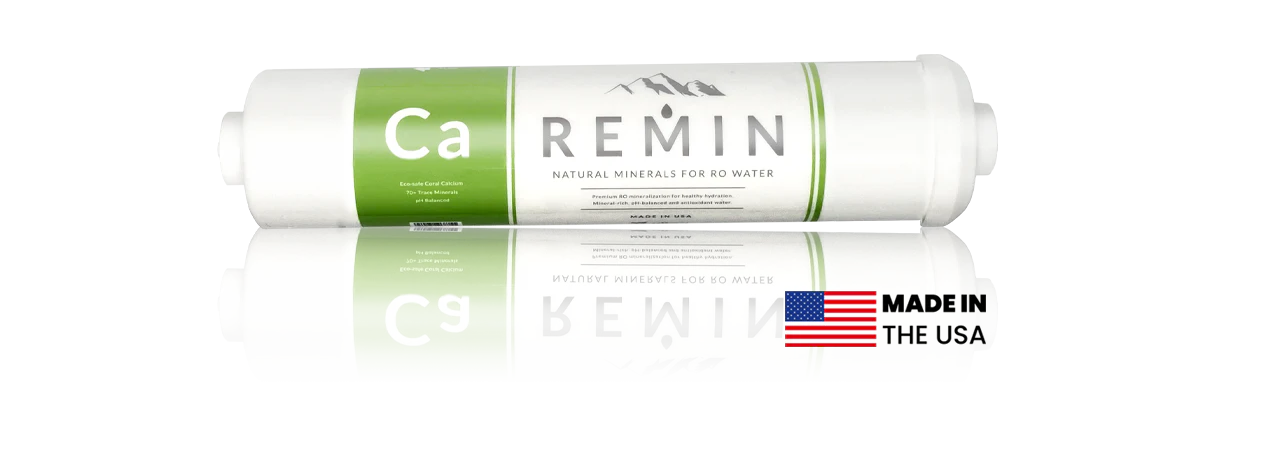
About 90% of TPW customers ask us to install a remineralizer to put back calcium, magnesium and the full compliment of trace minerals.
Although straight RO water tastes fantastic, adding a remin gives the water a fuller rounded taste. Online sellers of non RO filters often make inaccurate statements about RO water being unhealthy. This in not true.
What about RO water pH?
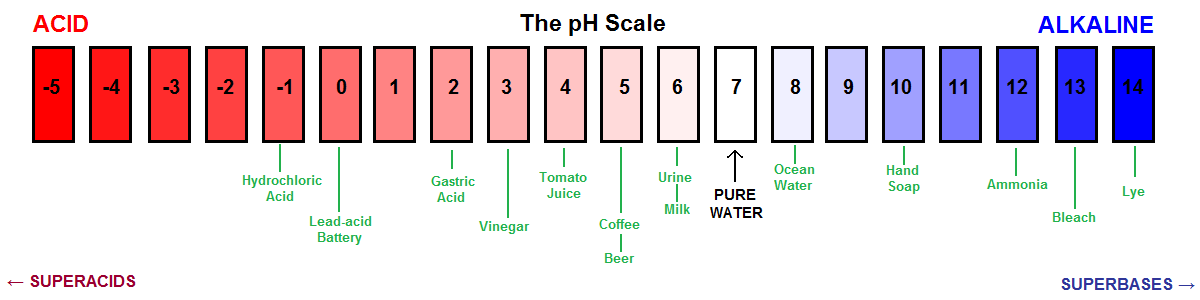
We find straight RO water to be around 6.5 pH. There is no evidence that slightly acidic water is harmful to humans or animals. Rainwater, river and lake water (aka surface waters) are all low pH, acidic waters.
We do install remineralizer cartridges of varying types. Remins bring water, when new, up to around 9 pH but taper off after a few weeks to around 8 pH. These cartridges last 2-3 years and are replaced when necessary.
Do we need to add a faucet for RO water?
Yes, a smaller faucet is usually added but there are 2 exceptions.
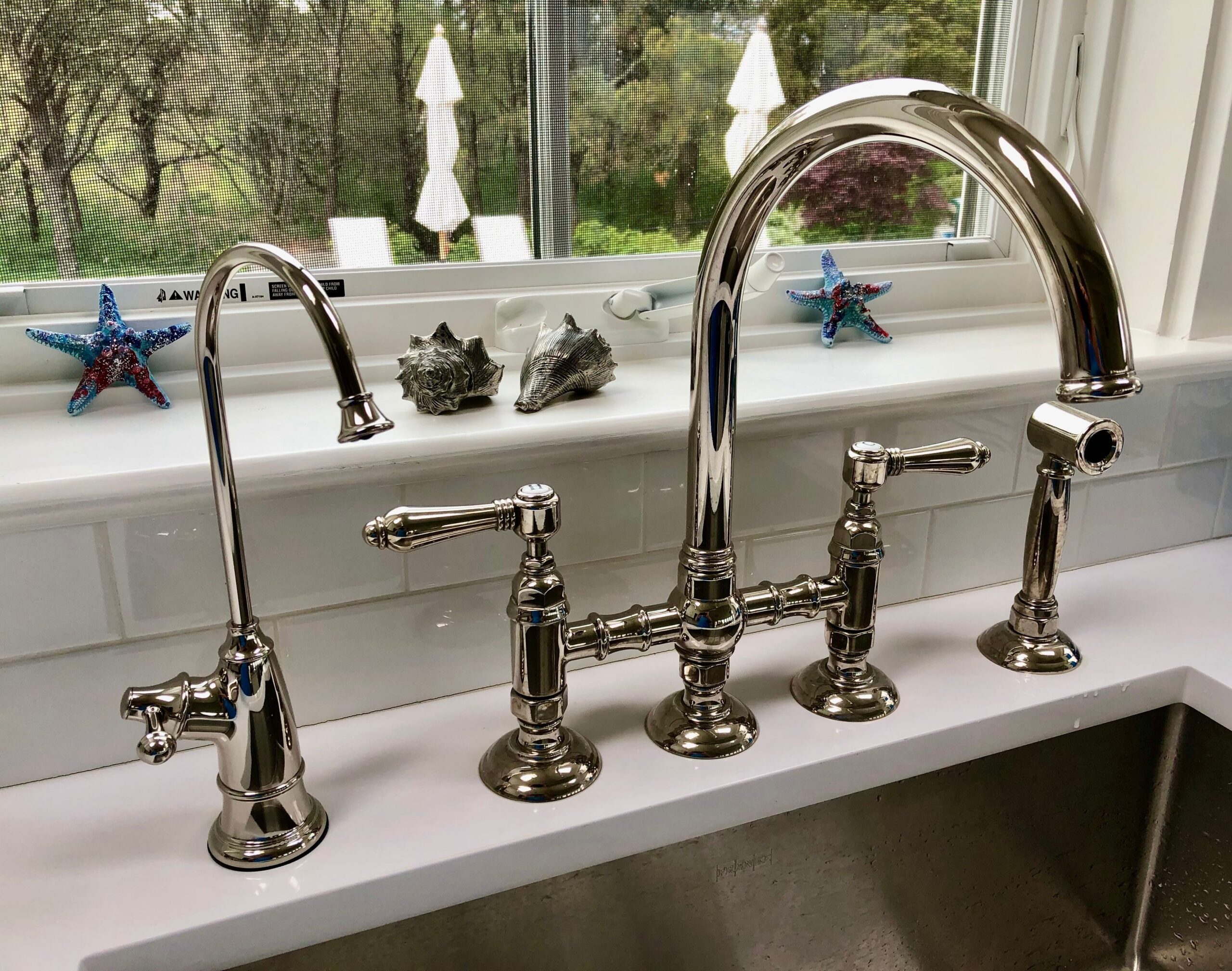
Straight RO water requires “RO Compatible” faucets but when water is remineralized, non RO compatible faucets are acceptable and safe. RO “compatible” faucets are simply inner plastic lined so no metals are in contact with potentially corrosive water.
- Exception 1: There are available faucets that are “all in one” 3 way, combo, full flow, hot + cold + a separate lever for RO water (e.g., Paragon Faucets).
- Exception 2: See Method 2 in the “New Construction” section below.
Where can my RO filter be installed?
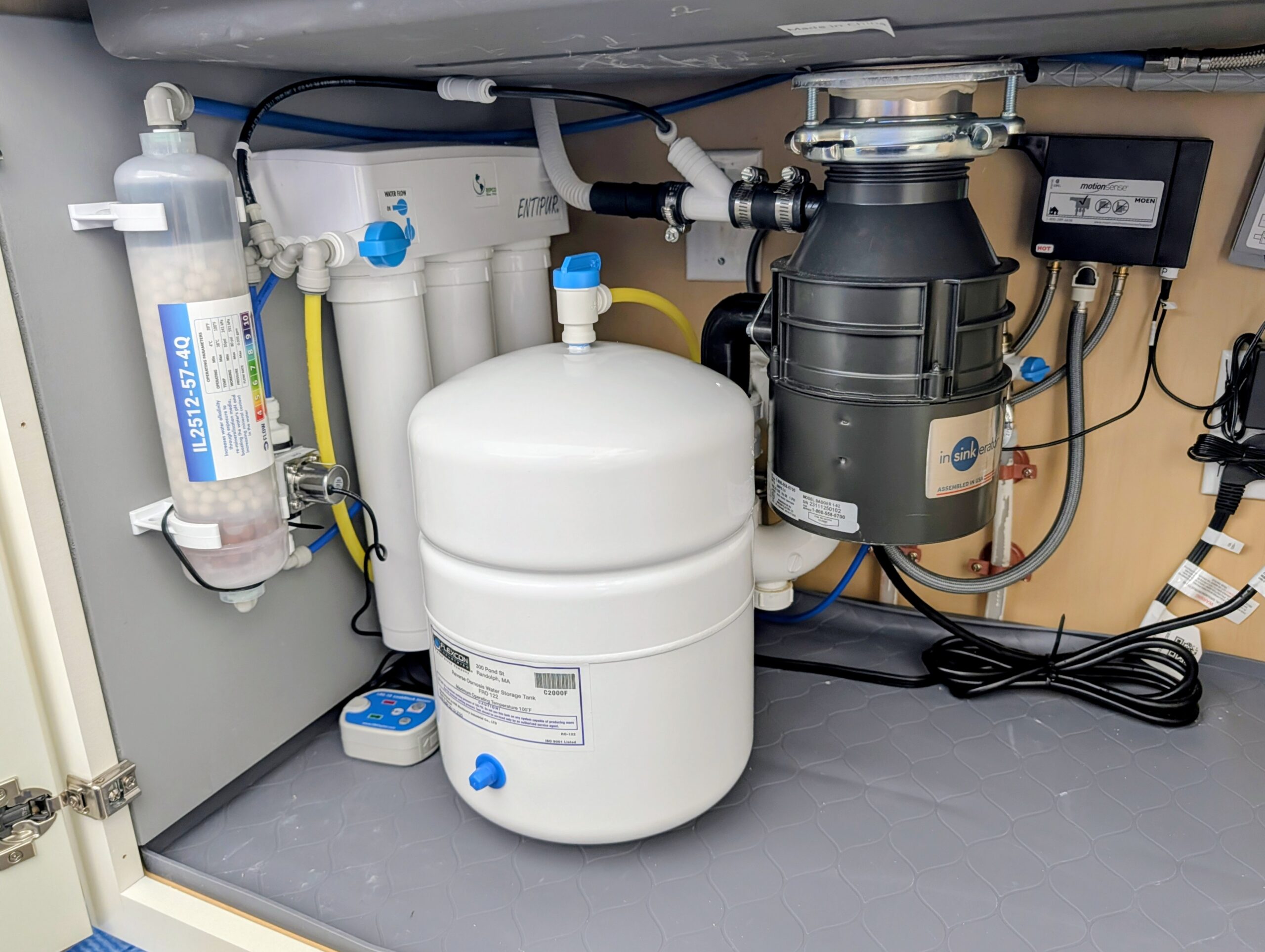
Most RO’s are installed under the kitchen sink. No matter how small your sink base cabinet is, we are always able to fit your RO there. Sometimes smaller holding tanks are used in this situation.
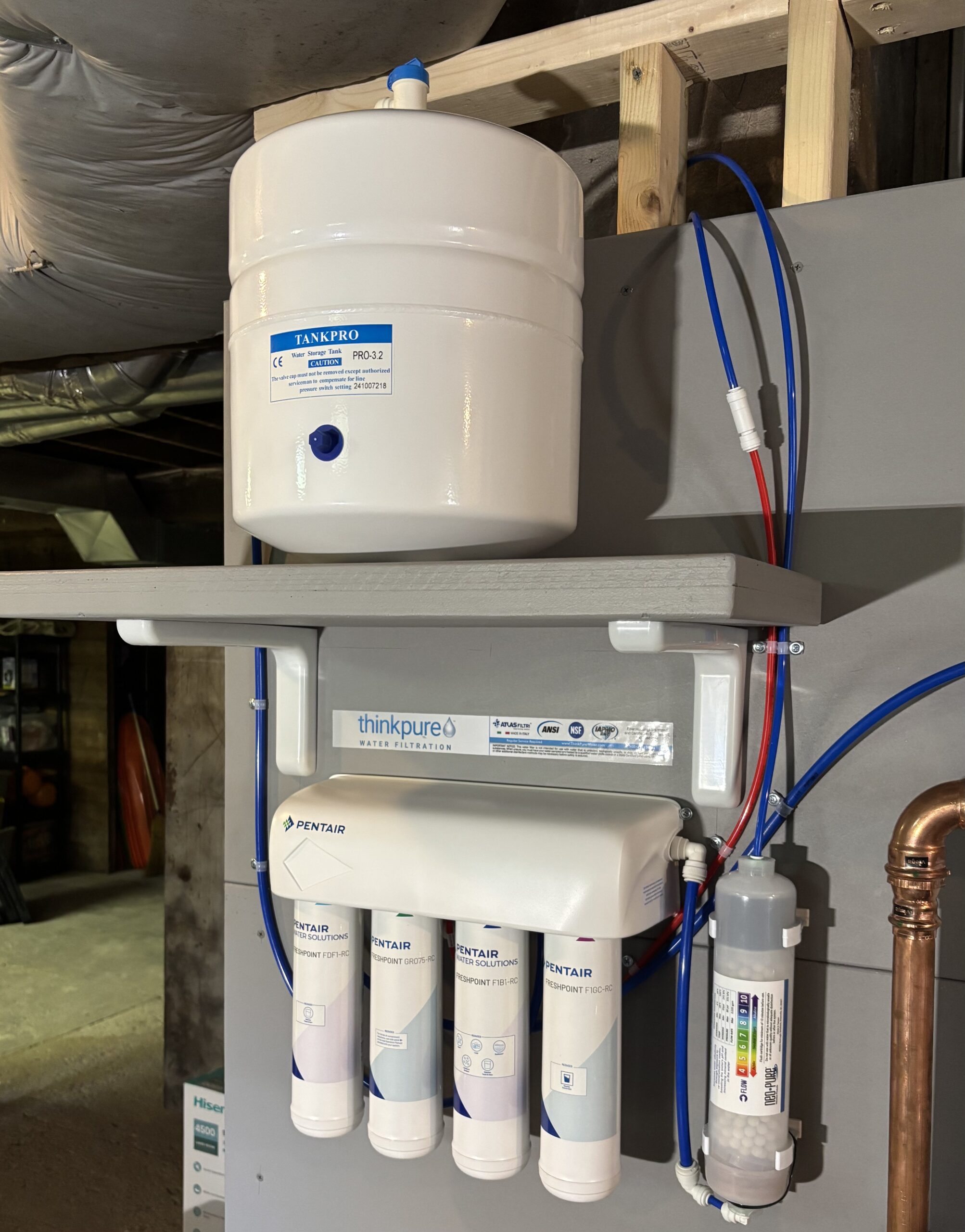
We consider the basement to be the best place for an RO if available, as it makes servicing much easier.
How long does it take to install an RO?
Standard under sink installations take 3-5 hours.
Basement installations generally take a full day. This is true even when you have every imaginable part that might be needed on the truck! Be careful of online RO sellers stating: “installs in 1 hour”!
Can an RO be connected to my InstaHot?
Yes. If your InstaHot has a hot+cold faucet, this can make sense. If hot only, then a hot+cold faucet needs to be ordered. They cost almost as much as the whole unit and you have to be sure its the same brand. Some homeowners want the InstaHot removed and the new RO faucet installed in the existing hole. InstaHot water is usually 190 degrees and 212 degree boiling water from a modern kettle makes better tea and coffee for sure.
Does RO waste water?
All RO systems reject water along with contaminates. To accept the idea of wasting water in relation to using an RO, we would also have to include watering the lawn, washing the car, showering, and washing our clothes as also wasting water.
The ratio is roughly 3.5 gallons to drain to 1 gallon of RO water produced. For an average family of 4, this would add 2-3% to your annual water bill.
Drinking costly bottled water delivered from out of state in diesel trucks, not to mention manufacturing the bottles from plastic pellets that end up in landfills creates real waste and pollution.
What happens when we go away for a week or 6 months?
Being away for a week or 2 is not an issue although it is a good thing to simply turn off your RO while away.
For extended times away, the supply valve should be turned off. Next would be open the faucet to completely empty the tank. Quick change cartridges should be removed and stored in the fridge in sealed plastic bags.
How often do cartridges need to be changed?
Generally we service RO systems once each year.
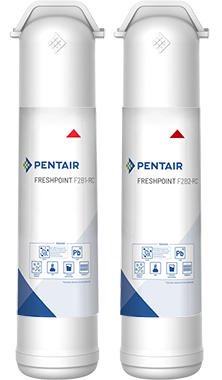
When more favorable conditions exist like pre-filtration, cleaner incoming water and smaller families, we can sometimes go as long as 18 months between changes. Depending on these conditions we replace the RO membrane every other year and the less costly peripheral cartridges yearly.
Are there different size tanks?
Yes. It is important to size the tank correctly to the family’s needs. RO tanks need to reach empty at least once or twice a month so water stays fresh.
We use a 1.2 gallon (actual water capacity) for smaller families and a 2.2 gallon for larger families and 5 gallon tanks when systems are designed for numerous points of use.
Is there any way to lessen the amount of reject water?
Yes! The best efficiency comes from emptying the tank completely.
In the morning, you can fill the kettle, fill up the kids water bottles and fill up a pot on the stove or fill a jug for the fridge. Practicing this at least a day or so a week also keeps water fresher and helps the tank to last longer.
Do you install countertop Reverse Osmosis filters?
No. These are simple DIY systems that plug in like a kettle.
They work but need permanent countertop space, make noise and have low storage amounts. They are suitable for an apartment, 1 or 2 persons but not for a family.
Can my RO be hooked up to the fridge and ice maker?
Yes, in most cases! Very often, the fridge is fed from a shut off valve under the sink. This adds virtually no time or cost to the installation.
In newer homes, the fridge is often fed with a wall recess supply valve behind the fridge. If the basement is finished, this can be difficult and sometimes not possible without significant added expense.
Do you install the newer tankless reverse osmosis systems?
No. Although these do not require a storage tank and take up less space, they come with certain unacceptable disadvantages.
- Flow rates are 1/3 to 1/2 the speed of a traditional tank system.
- They are not suitable to supply a fridge or ice maker.
- “TDS Creep”: Impurities can creep across the membrane when idle, meaning you must throw away the first 2 glasses of water.
We prefer the tried and true robust design and performance of storage tank type RO’s which have been around for 50 years.
What brands of RO filters does ThinkPure install?
Clack/Entipure: Clack is a Madison, Wisconsin company operating since 1944 and is highly respected in the industry. The main manifold is US made while other parts are made in Taiwan, China and England. Quick change cartridges are a proprietary design and only available through Authorized Dealers so with the Entipure RO, you will not be able to order your own cartridges online.

Pentair Freshpoint: Pentair is a St Paul Minnesota company operating since 1966 and has locations around the world. Pentair RO’s are designed and assembled in the US with parts sourced globally. Quick change cartridges are open source and are always available for purchase on line by DIY customers. The Freshpoint has a state of the art, super user friendly, cam system for removing and replacing cartridges.

Axeon Corporation: Axeon is a US company operating since 1990 in Temecula CA. Axeon manufactures its own RO membranes right here in the U.S. and sources parts from around the world. Axeon RO’s are super dependable and are custom built to our exact requirements for each application. They use Italian made, solid brass, rotary vane pumps and are built like a battleship.

Can a UV Sterilizer be added?
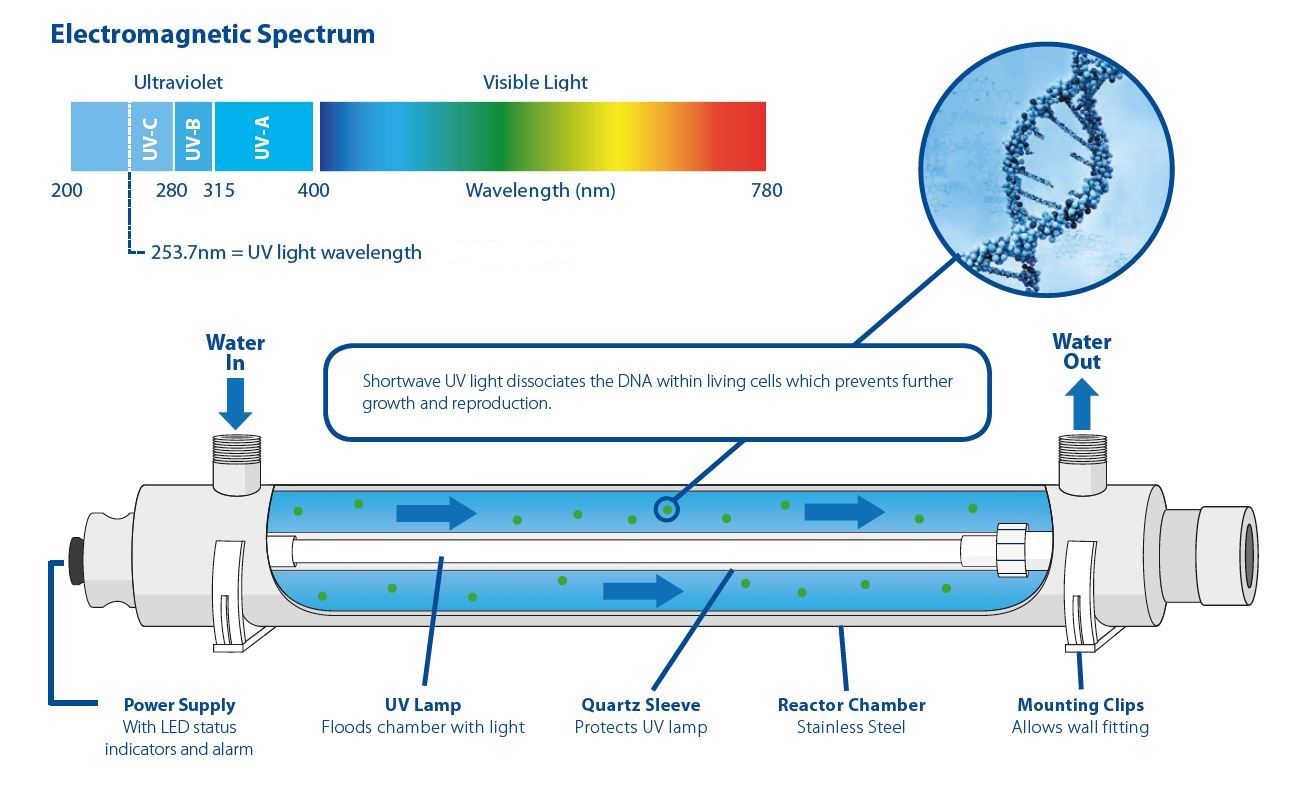
Yes, but these are usually not needed for city/town water or a well maintained private well.
We do install the new generation of LED UV Sterilizers specifically made for RO systems which do not warm up your water and never require bulb changes.
Is there a leak/auto shut off protector available?
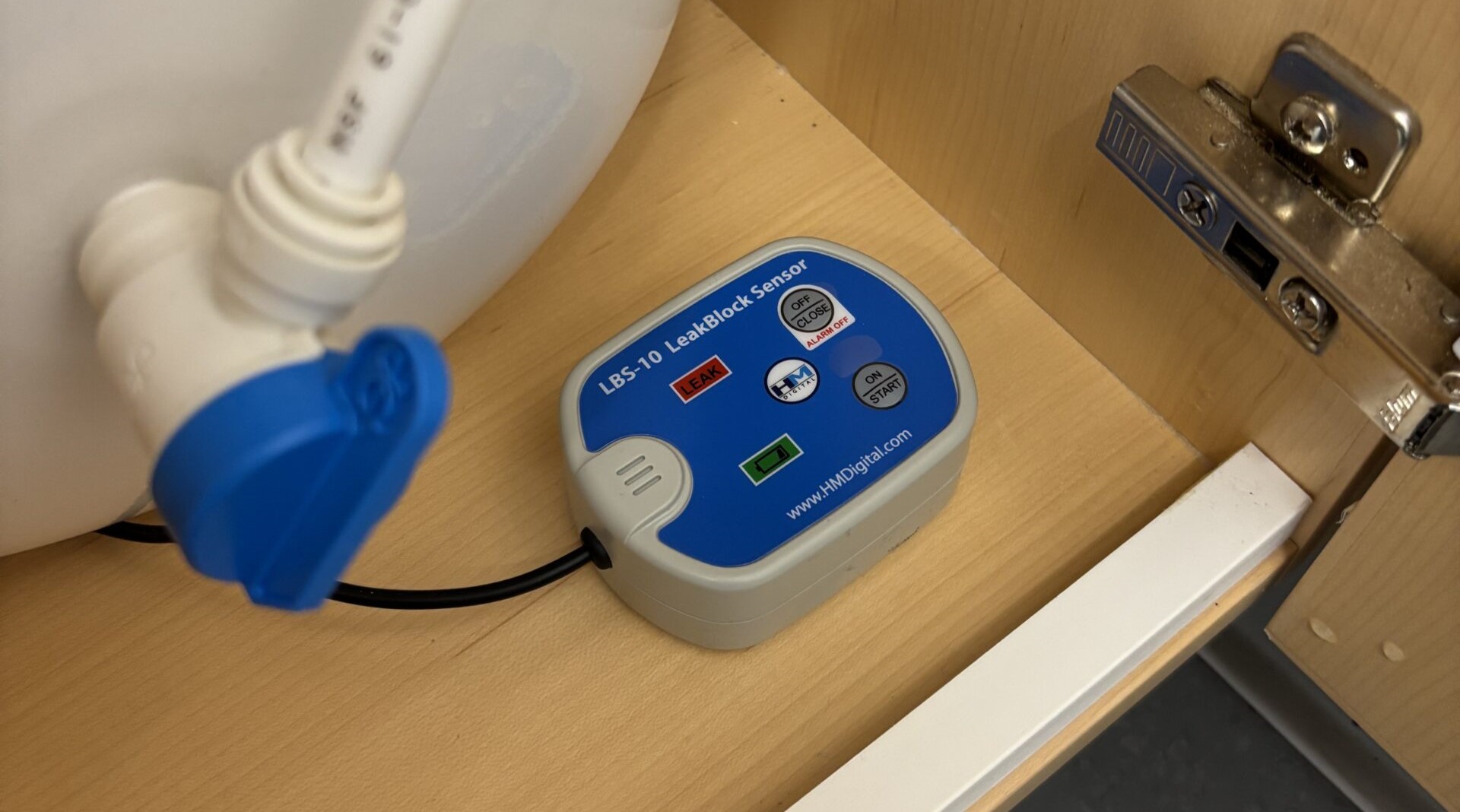
Yes! We are obsessed with safe and dependable installations.
We seal all pipe penetrations and use an HM Digital Solenoid Shut Off Module. This guarantees that any water from a leak will contact the detector, shut down the system and beep loudly.
During new construction, can we have RO water at multiple locations?
Yes! This can be done 2 different ways.
Method 1 (Basement Utility): A smaller 75 Gallon Per Day (GPD) RO can be wall mounted in a basement utility room. A 5 gallon (water capacity) tank would be used in this application. While basement ceilings are still open, separate RO water lines can be run to locations such as an added smaller low flow faucet at the kitchen sink or sinks, fridge, under counter ice maker, steam oven as well as a wall recessed bottle filler. This design makes sure all water that will be consumed, will be higher purity and remineralized. This setup is actually not that costly.
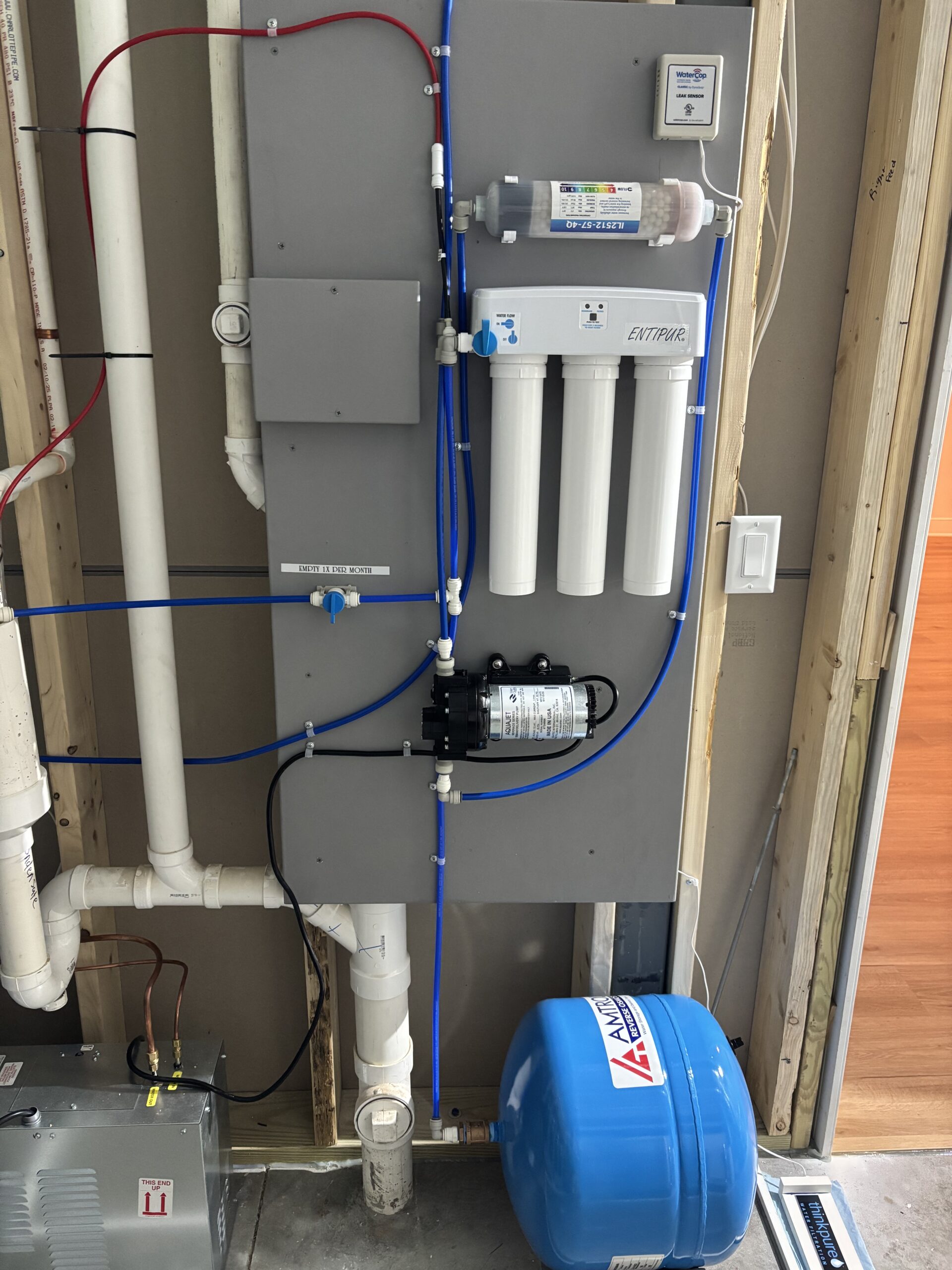
Method 2 (Partial Whole House): This method is what can be considered a partial whole house RO system. Both Method 1and Method 2 can only be accomplished in a new construction or major remodel. The goal and design of this method is to provide full flow remineralized RO water to the cold water side of all sink faucets in kitchen and bathrooms, including a pot filler as well as fridge, under cabinet ice maker, recessed bottle filler etc. There would be no need for added, smaller RO faucets in this design. Excluded would be all hot water, dishwasher, laundry sink, washing machine, toilets, humidifiers, outdoor water and other possible locations where the water will not be consumed. Method 2 obviates the need for any added smaller low flow RO faucets. Equipment required: A 750-1500 GPD light commercial (LC) RO Filter, a 100-150 Gallon atmospheric storage tank, a variable speed pressure delivery pump, a pH Neutralizer tank, a Carbon Block polishing cartridge and last in line, a UV Sterilizer. The best plumbing design for this method is a manifold with individual “homerun” lines for each point of use. Each line would have a shut off and be tagged. With full remineralization and maintained pH correction, copper or Pex tubing can be safely used.